Giuseppe Manco is Director of Research at the Institute of High Performance Computing and Networks of the National Research Council of Italy. His research interests include User Profiling and Behavioral Modeling, Social Network Analysis, Information Propagation and Diffusion, Recommender Systems, Machine Learning for Cybersecurity.
Expert on data science, data analytics and enabling technologies for data analytics. Interested in new frontiers of Computer Science and Technology aimed at analyzing Complex Big Data. Co-founder of Open Knowledge Technologies (OKT), a spin-off company of University of Calabria aimed at bringing innovation from academia to industry on the specific topics of Artificial Intelligence and Cybersecurity.
PhD in Computer Science, 2001
University of Pisa
MSc in Computer Science
University of Pisa
I am the scientific coordinator of the ICAR research group Behavioral Modeling and Scalable Analytics (formerly ADALab: Laboratory of Advanced Analytics on Complex Data).
The main focus of the research group is Behavior Computing and Analytics: that is, computationally efficient mathematical models for analysing complex systems and entities which interact within complex systems. Example include individuals, IoT Devices and sensors, Smart Object, etc. Behavior analytics is an important topic in different contexts including: consumer profiling, social computing, computational advertising and group-decision making, cybersecurity, opinion modeling, smart industry. The term “Behavior” refers to actions and reactions of any individual, in response to various stimuli or inputs. The recent advent of technologies for collecting and tracking behavioral data at large scale, has made it possible to devise new mathematical models that allow to analyse, understand, and predict actions. These include models for event streams, social network connections, purchasing habits and opinion formation. The main challenge is hence to understand structure and evolution dynamics of events, in a way that allows to disclose the latent mechanism which govern them and enact predictive abilities both on the short and long term.
The research agenda includes the study of probabilistic generative models and statistical inference, deep representation learning and constraint-based modeling (which encompasses integration of symbolic-subsymbolic learning). In particular our focus is on the following themes.

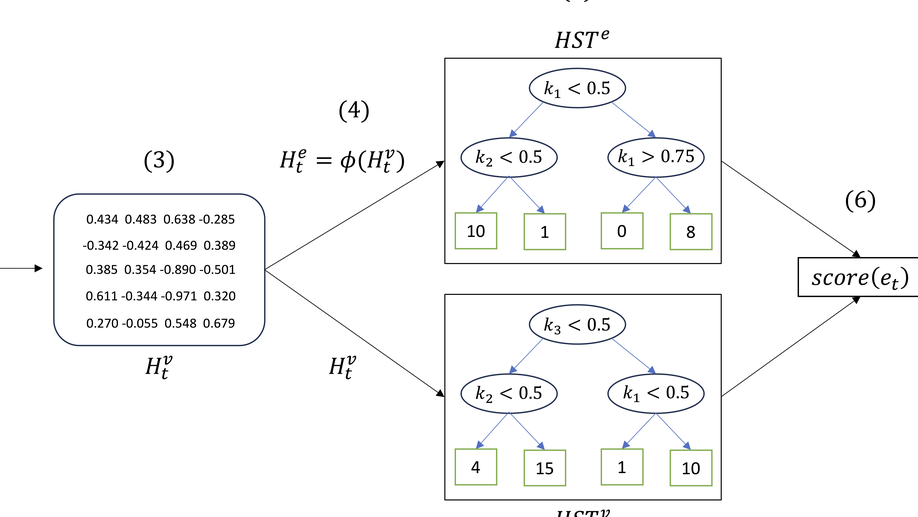
Many real-world scenarios involving streaming information can be represented as temporal graphs, where data flows through dynamic changes in edges over time. Anomaly detection in this context has the objective of identifying unusual temporal connections within the graph structure. Detecting edge anomalies in real time is crucial for mitigating potential risks. Unlike traditional anomaly detection, this task is particularly challenging due to concept drifts, large data volumes, and the need for real-time response. To face these challenges, we introduce ARES, an unsupervised anomaly detection framework for edge streams. ARES combines Graph Neural Networks (GNNs) for feature extraction with Half-Space Trees (HST) for anomaly scoring. GNNs capture both spike and burst anomalous behaviors within streams by embedding node and edge properties in a latent space, while HST partitions this space to isolate anomalies efficiently. ARES operates in an unsupervised way without the need for prior data labeling. To further validate its detection capabilities, we additionally incorporate a simple yet effective supervised thresholding mechanism. This approach leverages statistical dispersion among anomaly scores to determine the optimal threshold using a minimal set of labeled data, ensuring adaptability across different domains. We validate ARES through extensive evaluations across several real-world cyber-attack scenarios, comparing its performance against existing methods while analyzing its space and time complexity. The code used to perform the experiments is publicly available at https://github.com/AnomalyRecognitionModelForEdgeStreams/ARES.

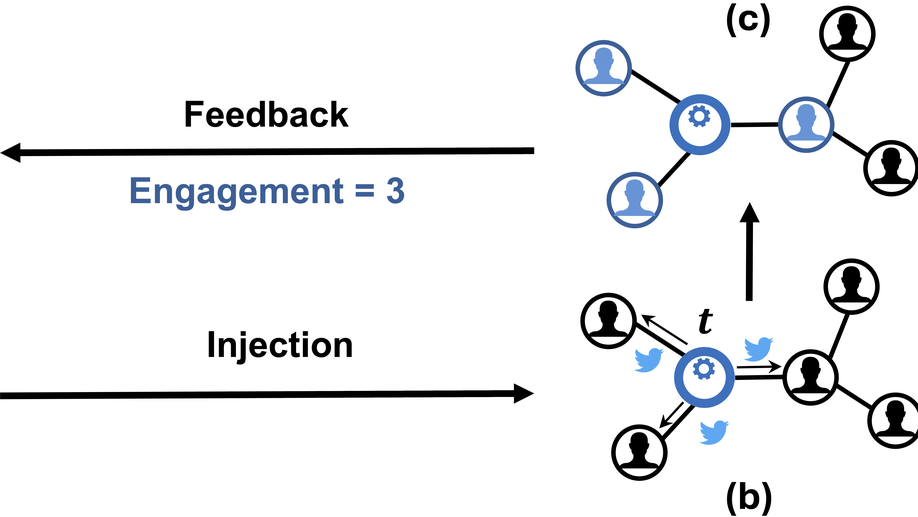
Large Language Models (LLMs) demonstrate significant persuasive capabilities in one-on-one interactions, but their influence within social networks, where interconnected users and complex opinion dynamics pose unique challenges, remains underexplored. This paper addresses the research question: \emph{Can LLMs generate meaningful content that maximizes user engagement on social networks?} To answer this, we propose a pipeline using reinforcement learning with simulated feedback, where the network’s response to LLM-generated content (i.e., the reward) is simulated through a formal engagement model. This approach bypasses the temporal cost and complexity of live experiments, enabling an efficient feedback loop between the LLM and the network under study. It also allows to control over endogenous factors such as the LLM’s position within the social network and the distribution of opinions on a given topic. Our approach is adaptive to the opinion distribution of the underlying network and agnostic to the specifics of the engagement model, which is embedded as a plug-and-play component. Such flexibility makes it suitable for more complex engagement tasks and interventions in computational social science. Using our framework, we analyze the performance of LLMs in generating social engagement under different conditions, showcasing their full potential in this task. The experimental code is publicly available at https://github.com/mminici/Engagement-Driven-Content-Generation.

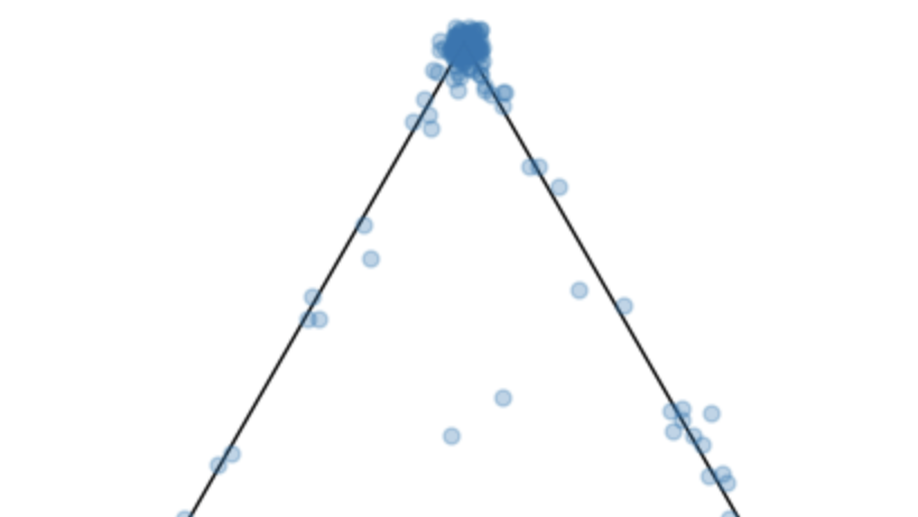
Simulating a recommendation system in a controlled environment, to identify specific behaviors and user preferences, requires highly flexible synthetic data generation models capable of mimicking the patterns and trends of real datasets.In this context, we propose HyDRA, a novel preferences data generation model driven by three main factors: user-item interaction level, item popularity, and user engagement level.The key innovations of the proposed process include the ability to generate user communities characterized by similar item adoptions, reflecting real-world social influences and trends.Additionally, HyDRA considers item popularity and user engagement as mixtures of different probability distributions, allowing for a more realistic simulation of diverse scenarios.This approach enhances the model’s capacity to simulate a wide range of real-world cases, capturing the complexity and variability found in actual user behavior.We demonstrate the effectiveness of HyDRA through extensive experiments on well-known benchmark datasets.The results highlight its capability to replicate real-world data patterns, offering valuable insights for developing and testing recommendation systems in a controlled and realistic manner.The code used to perform the experiments is publicly available: https://github.com/flexibledatageneration/HYDRA.

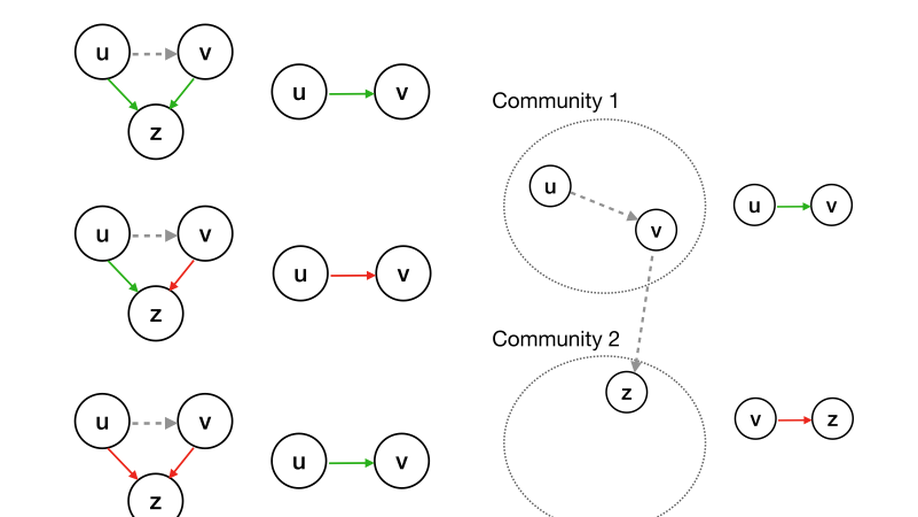
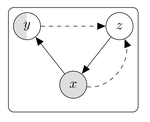
Signed Graph Neural Networks (SGNNs) have recently gained attention as an effective tool for several learning tasks on signed networks, i.e., graphs where edges have an associated polarity. One of these tasks is to predict the polarity of the links for which this information is missing, starting from the network structure and the other available polarities. However, when the available polarities are few and potentially noisy, such a task becomes challenging. In this work, we devise a semi-supervised learning framework that builds around the novel concept of \emph{multiscale social balance} to improve the prediction of link polarities in settings characterized by limited data quantity and quality. Our model-agnostic approach can seamlessly integrate with any SGNN architecture, dynamically reweighting the importance of each data sample while making strategic use of the structural information from unlabeled edges combined with social balance theory. Empirical validation demonstrates that our approach outperforms established baseline models, effectively addressing the limitations imposed by noisy and sparse data. This result underlines the benefits of incorporating multiscale social balance into SGNNs, opening new avenues for robust and accurate predictions in signed network analysis.

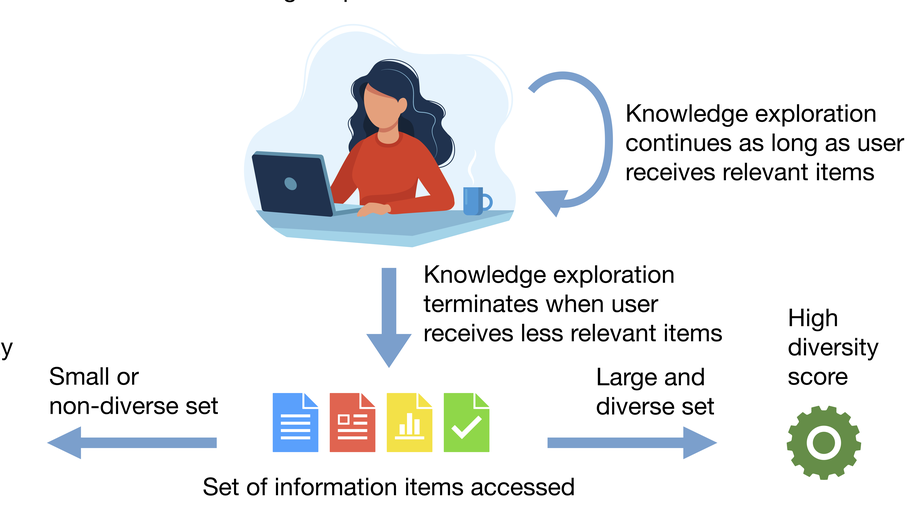
Providing recommendations that are both relevant and diverse is a key consideration of modern recommender systems. Optimizing both of these measures presents a fundamental trade-off, as higher diversity typically comes at the cost of relevance, resulting in lower user engagement. Existing recommendation algorithms try to resolve this trade-off by combining the two measures, relevance and diversity, into one aim and then seeking recommendations that optimize the combined objective, for a given number of items to recommend. Traditional approaches, however, do not consider the user interaction with the recommended items. In this paper, we put the user at the central stage, and build on the interplay between relevance, diversity, and user behavior. In contrast to applications where the goal is solely to maximize engagement, we focus on scenarios aiming at maximizing the total amount of knowledge encountered by the user. We use diversity as a surrogate of the amount of knowledge obtained by the user while interacting with the system, and we seek to maximize diversity. We propose a probabilistic user-behavior model in which users keep interacting with the recommender system as long as they receive relevant recommendations, but they may stop if the relevance of the recommended items drops. Thus, for a recommender system to achieve a high-diversity measure, it will need to produce recommendations that are both relevant and diverse. Finally, we propose a novel recommendation strategy that combines relevance and diversity by a copula function. We conduct an extensive evaluation of the proposed methodology over multiple datasets, and we show that our strategy outperforms several state-of-the-art competitors. Our implementation is publicly available at https://github.com/EricaCoppolillo/EXPLORE.